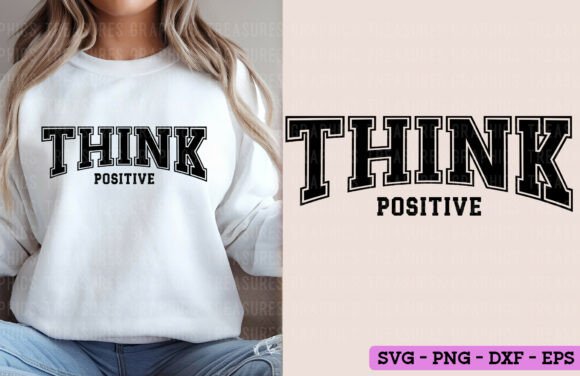
Think Positive PNG SVG Inspirational
A Designer’s First Look: Clean, Calm, and Craft-Ready
When I opened Think Positive PNG SVG Inspirational, I didn’t see flashy fonts or aggressive styling—I saw quiet confidence. The layout is centered, balanced, and uncluttered: a soft curved phrase in a friendly sans-serif, with gentle spacing between letters and subtle rounded terminals. It feels warm without being cutesy, modern without sacrificing legibility, and uplifting without leaning into cliché. That matters—especially when you’re stitching it onto a baby onesie for a new parent or embroidering it on a linen tea towel for a boutique gift set. This isn’t a shout-it-from-the-rooftop design; it’s a quiet affirmation that lands because it breathes.
How It Stitches: Real Embroidery Behavior, Not Just Pixels
I tested Think Positive PNG SVG Inspirational on three real-world projects: a medium-weight cotton tote bag, a fleece-lined sweatshirt, and a 100% cotton kitchen towel. On the tote, it stitched cleanly with minimal puckering—especially when paired with medium-weight cutaway stabilizer. The letterforms held their shape well, and the satin stitch edges stayed smooth, not jagged or over-dense. On the sweatshirt, I adjusted tension slightly and added a tear-away topper, and it still read clearly at 3.5 inches wide—no lost detail in the curves of the “g” or “e.”
Where it shines brightest is in context: think embroidered pillow covers for a calm nursery, minimalist aprons for a small-batch bakery, or personalized caps for wellness coaches. It’s equally at home on a holiday gift (a cozy flannel blanket with this phrase softly stitched near the corner) or as part of a curated Etsy listing for mindful living products. As a machine embroidery design, it avoids common pitfalls—no ultra-thin connecting strokes, no overlapping fills that cause thread buildup, and no tiny interior details that vanish under dense stitching.
Where to Use It—and Where to Pause
Think Positive PNG SVG Inspirational works beautifully on stable, medium-to-heavy fabrics: denim, canvas, twill, terry cloth, and midweight knits. But tread thoughtfully on stretchy fabric—like ribbed jersey or lightweight French terry—without proper stabilization and hooping technique. It also needs breathing room on curved surfaces: cap fronts or tapered pillow corners can distort letter proportions if digitized without contour compensation (which this file doesn’t appear to include, based on visual inspection).
Small hoop sizes (under 4×4 inches) are doable—but only if you scale down thoughtfully. Below 2.75 inches, the inner counters (like the enclosed space in “o” or “e”) risk filling in or losing definition. And while it reads well on light fabric, test it on dark fabric with contrasting thread: some lighter shades of gray or beige may lack enough pop unless you use bright white or metallic thread. Also avoid layering it directly over seams or bulky seams—it’s best placed on flat, uninterrupted fabric zones.
Design Notes Every Embroiderer Should Check Before Stitching
- Test first on scrap fabric matching your final project’s weight and stretch—especially for custom apparel or baby embroidery.
- Review stitch density: this design leans moderate—not overly dense, but not sparse either. That helps with wash durability on items like tea towels or kids’ clothes.
- Confirm hoop size compatibility: it fits comfortably in a 4×4 hoop at standard sizing, but double-check your machine’s max dimensions before scaling up for large tote bag designs.
- Inspect small details at actual stitch size—not just on screen. Zoom in on vector files to spot any unintended overlaps or stray anchor points.
- Mock it in black and white before choosing thread colors. Does the phrase retain rhythm and balance when stripped of color? With Think Positive PNG SVG Inspirational, it does—proof of solid typographic structure.
- Use appropriate stabilizer: cutaway for knits, tear-away for stable wovens, and a light topper for textured fabrics like terry or fleece.
- Verify licensing before selling finished products or bundling it as part of a digital embroidery file pack. Since it’s marketed as a Graphics product for T-Shirt Designs, confirm whether commercial use is included.
Why It Builds Trust—Not Just Texture
In my work with small shop owners and Etsy sellers, I’ve watched how one well-executed phrase can elevate an entire product line. Think Positive PNG SVG Inspirational doesn’t scream “handmade”—it whispers it. That subtlety builds customer trust: buyers recognize craftsmanship in clean edges, consistent stitch height, and thoughtful spacing—not just in glitter or novelty fonts. When stitched on a linen napkin set or a neutral-toned sweatshirt, it feels intentional, not mass-produced. That perception lifts perceived value, supports brand consistency across handmade product lines, and makes items feel giftable—even without packaging upgrades.
Final Thought: A Quiet Workhorse, Not a Flashy One-Off
This isn’t a design that demands attention—it earns it. In a crowded market of overdesigned quotes and trend-chasing motifs, Think Positive PNG SVG Inspirational stands out by doing less, but doing it well. It fits naturally into slow-craft movements, wellness-focused shops, and thoughtful gifting niches. Whether you’re building a craft business around personalized baby embroidery or launching a small batch of embroidered aprons for local chefs, this embroidery file serves as reliable, repeatable, and quietly professional design assets.
Just remember: even the most balanced applique design or digital embroidery file depends on your process. Test, stabilize, and observe—not just once, but every time. Because the difference between a good stitch and a great finished product isn’t in the file alone. It’s in how thoughtfully you meet it halfway.