Mama Claus T Shirt: An Embroidery Designer's Real Review
I pulled up the Mama Claus T Shirt design file last Tuesday while a client was asking about holiday-themed tote bags for her small gift shop. She wanted something warm, instantly recognizable, and just playful enough to make someone smile while standing in a checkout line. That is the kind of real-world test that separates a nice-looking graphic from a design that actually earns its place in your embroidery library. And honestly, that moment shaped how I looked at this one.
What This Design Feels Like Before You Even Stitch It
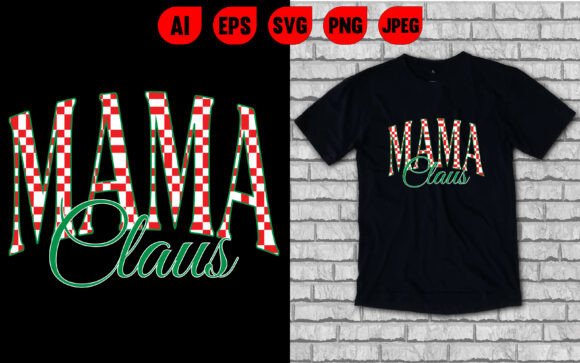
The first thing I noticed about Mama Claus T Shirt was the mood it creates. It leans into that cozy, slightly cheeky holiday persona without tipping into cartoon territory. The typography has a confident, rounded presence that reads as festive but not frantic. I could immediately picture it stitched out in a deep red thread on a cream sweatshirt, framed by a soft satin stitch outline that gives it just enough structure to feel finished.
For embroidery designers who work on holiday collections for Etsy seller shops or seasonal craft fair lineups, finding a design that feels personal but not overly niche is the sweet spot. Mama Claus hits that note. It works for the mom who runs the household chaos at Christmas, the grandmother who still signs gifts with a wink, and the friend group that trades matching holiday shirts every year. The theme is specific enough to feel intentional, yet broad enough to move across product types without losing its charm.
Where This Design Naturally Belongs In Your Embroidery Lineup
After testing a few layout placements in my software, I kept coming back to the same handful of embroidery project ideas. This design thrives on custom apparel pieces where the wearer wants something that feels like an inside joke among family members. Think crewneck sweatshirt embroidery, relaxed-fit t-shirts, and even a quilted apron for the person who does all the holiday baking.
I also ran it through a mental mockup on a canvas tote bag design, which might be my favorite use case. A sturdy natural cotton tote with the Mama Claus T Shirt design centered in the lower third, surrounded by a little negative space, looks balanced and intentional. Add a thin border or a subtle snowflake accent, and you have a handmade product that feels curated rather than slapped together at the last minute.
For those selling personalized gift items, this design opens up easy upsell opportunities. Stitch it onto a pillow cover, a kitchen towel set, or even a baby embroidery onesie paired with a tiny matching hat. The versatility comes from how the typography holds its own without demanding a complicated backdrop. On a tea towel with a simple border stitch, it reads as elegant. On a bright red cap with white thread, it pops with energy. That adaptability matters when you are building out a craft business product line that needs to feel cohesive across multiple item types.
How Stitching Details Shape The Final Look
When I evaluate any machine embroidery design for real production use, I think about thread behavior on different fabric surfaces long before I ever hoop anything. The Mama Claus T Shirt graphic carries a typography-forward layout, which means satin stitch and fill stitch choices will make or break the final clarity. Letterforms that look crisp on a screen can turn muddy on a textured fabric texture if the stitch density is not right.
I would strongly recommend testing this design on a mid-weight cotton first. Cotton gives you an honest read on how the letters hold their spacing, whether any thin strokes close up under tension, and how the overall shape reads at arm's length. From there, you can decide if you need to adjust thread colors for darker backgrounds or if a metallic accent thread could elevate the festive feel without causing thread break issues.
One thing I learned early in my embroidery career is that seasonal typography designs can suffer on stretchy fabric surfaces like ribbed knit or performance blends. The letters shift slightly during wear, and on a design where the personality lives in the wordplay, even a tiny distortion can dull the impact. Use a reliable stabilizer and consider a light to medium cutaway backing, especially if you plan to stitch this onto t-shirts or lightweight hoodies for commercial embroidery orders.
Real Scenario: A Holiday Tote Bag That Almost Went Wrong
Let me share a quick behind-the-scenes moment from my own workspace. I was prepping a sample run of six canvas totes for a local boutique that wanted holiday-themed handmade product options under thirty dollars retail. I had queued up several holiday embroidery designs, including Mama Claus T Shirt, and was moving fast because the shop owner needed photos for social media by Friday.
I hooped the first tote with my usual medium-weight cutaway stabilizer, loaded a rich burgundy thread, and started the stitch-out. The letters came through beautifully. But I realized halfway through that I had not paused to check the hoop size clearance on the tote's side seam. The design fit, but only just. If I had been working with a slightly smaller hoop or a thicker bag construction, I would have been fighting the fabric near the edge of the embroidery field. That experience reminded me to always measure twice on tote bag design projects where seam bulk can sneak up on you near the top or side gussets.
The finished tote looked excellent. The burgundy thread on natural canvas gave Mama Claus T Shirt a rich, handcrafted feel that photographs beautifully in flat lay printable mockup style images. My client sold out of all six totes within two weekends, and she reordered with a request for coordinating kitchen towel sets. That is the kind of organic product expansion that happens when a design does its job well on the first run.
Watch Points And Where You Should Pause Before Stitching
No design review is honest without mentioning where things could go sideways. The Mama Claus T Shirt design, like most typography-based embroidery file options, demands attention on a few key points.
Small hoop size machines, especially four-by-four frames, might struggle if the design dimensions push close to the stitchable boundary. Before you commit to running a batch, open the digital embroidery file in your software and confirm the exact stitch area. If you need to scale down, check whether any fine serifs or decorative elements lose definition at a reduced size. Scaling typography below a certain threshold turns confident lettering into a blurry suggestion, and on a design where the personality lives in the words, that is not a compromise I would recommend.
Dark fabric backgrounds also deserve a careful test run. White or light thread on a deep navy or forest green sweatshirt can look stunning, but only if the stitch density is sufficient to prevent the fabric from ghosting through the fill areas. I always stitch a small sample patch on a scrap of the same dark material before committing to the final garment. It takes five minutes and saves the disappointment of pulling stitches out of a finished product.
For layered garments or anything with a lining, like a quilted jacket or a lined apron, check whether you can hoop just the top layer. Stitching through multiple fabric layers changes how the design sits and can create puckering around the edges if the underlay is not adjusted accordingly.
How Buyers React To This Design Style
Over years of selling at craft fairs, pop-up markets, and through online Etsy seller listings, I have noticed a pattern in how customers interact with personality-driven holiday embroidery. They pause. They smile. They often read the design out loud, sometimes with a little laugh. Then they call over whoever they are shopping with to look at it. That social reaction is valuable. It transforms a product from a passive display item into something that starts conversations at a booth or in a product listing comment section.
The Mama Claus T Shirt design triggers exactly that kind of response. It is warm, a little proud, and perfectly fitted to the person who holds the holiday together. When a customer sees it on a finished product, they are not just looking at thread on fabric. They are seeing themselves, or someone they love, reflected in that phrase. That emotional recognition translates directly into higher buyer engagement and repeat purchases, especially when you present the design on well-chosen blanks with clean stitching.
Building A Cohesive Holiday Collection Around This Piece
From a small shop product strategy perspective, Mama Claus T Shirt anchors a holiday collection nicely. Pair it with coordinating designs that feature simpler motifs, smaller text accents, or matching color palettes, and you create a suite of products that feels curated. A sweatshirt embroidery featuring this design on the front left chest, combined with a full-back design on a different item, gives customers options at different price points without fragmenting your brand look.
For craft business owners who sell digital product mockups or embroidery-ready files, this kind of design also photographs well for printable mockup previews. Flat lay shots on folded towels, styled scenes with sprigs of pine, and modeled photos on relaxed-fit crewnecks all help communicate value before a customer ever downloads or purchases anything.
Practical Designer Checklist Before You Go Live
Every time I add a new embroidery design to my production rotation, I run through a mental checklist that has saved me more times than I can count. Here is what I recommend for Mama Claus T Shirt before you stitch it onto anything destined for a customer:
- Test on scrap fabric that matches your final product weight and texture
- Check thread color contrast on both light and dark backgrounds
- Review stitch density and look for any pulling or gaps in the letterforms
- Confirm hoop size compatibility with your machine and your blank product
- Inspect small details under good lighting — what looks fine on screen can vanish in thread
- Test a black-and-white preview to see how the design reads without color cues
- Use appropriate stabilizer for your fabric type, and do not skip the test wash if the item will be laundered frequently
- If you plan to sell finished items or include the design in commercial embroidery product lines, confirm the licensing terms before listing anything publicly
I cannot speak to exact file formats, stitch count, or specific machine compatibility for this particular listing, because those details depend on how the original seller prepared the design assets. Always check the product description in the store where you purchased it and reach out to the designer directly if those specifications are not clearly stated. A quick question now prevents a production stall later.
Final Stitch Notes From The Worktable
After spending time with the Mama Claus T Shirt design across several mockups and a few real stitch-outs on tote bags and a sample sweatshirt, I can say this piece earns its keep in a holiday rotation. It does not try to do too much visually, and that restraint works in its favor. The theme is clear, the mood lands exactly where it should, and the design adapts well across the product categories that matter most to creative entrepreneurs and apparel decorators: shirts, bags, kitchen linens, and gifts that feel handmade but look professional.
For embroidery designers and small business owners planning seasonal releases, the value here lies in reliable customer appeal. This is not a design that needs explaining. It connects on first glance, stitches up cleanly when you dial in your settings, and fits into existing product catalogs without demanding a whole new production workflow. That combination of clarity, flexibility, and genuine seasonal warmth makes it a practical addition rather than a one-off experiment.
When you test it in your own workspace, give yourself the grace of a slow sample run. Let the design tell you what fabric it prefers, what thread finish brings out its best personality, and which product in your lineup it naturally gravitates toward. That conversation between designer, machine, and material is where the best finished product decisions happen, and no review can replace the insight you gain from stitching it yourself.