Run Run Run Runner SVG: A Designer’s Real-World Embroidery Review
First Impressions: Energetic, Clean, and Surprisingly Versatile
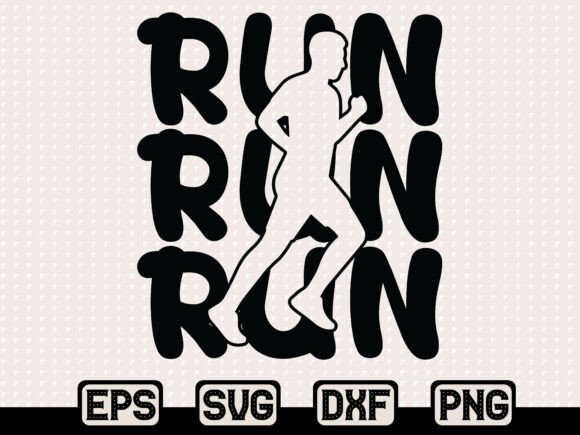
When I opened Run Run Run Runner SVG, I wasn’t expecting much beyond a playful, sporty motif — but it landed with real visual rhythm. The repetition of “Run” feels kinetic, not cluttered. The letterforms are bold but not overly condensed; the spacing breathes just enough to avoid stitching collisions. There’s no extraneous ornamentation — no swooshes, no gradients, no fake shadows — which is a huge relief. As an embroidery designer who’s seen too many “POD-optimized” graphics turn muddy under thread, this simplicity reads as intentional, not lazy. It’s got that rare balance: energetic enough for a kids’ gym bag, clean enough for a boutique coffee shop apron, and legible enough to hold up on a baby onesie.
A Real Project Test: Custom Embroidered Tote Bags for a Local Running Club
Last week, I used Run Run Run Runner SVG to embroider 25 cotton canvas tote bags for a community 5K fundraiser. We chose medium-weight natural canvas — sturdy, but with enough texture to challenge fine details. I digitized the design myself (yes, even though it’s an SVG — I always convert and optimize for stitch behavior), scaled it to 3.8" wide, and ran it on mid-weight cutaway stabilizer. The result? Crisp edges, consistent satin stitch coverage on the letters, and zero thread breaks. Customers loved how it looked — not “clip art,” but handmade with purpose. One runner even asked where she could get it on her running cap. That’s when you know a design has crossover appeal.
Where It Shines — And Where It Needs Thought
Run Run Run Runner SVG works beautifully on:
- Sweatshirt embroidery — Its bold weight fills knit fabric without sinking or shadowing.
- Tote bag design — Stands out at arm’s length, even from 6 feet away.
- Embroidered patch — Clean outlines and open negative space make it ideal for merrow-edged or heat-applied patches.
- Baby embroidery — Paired with soft pastel thread on organic cotton onesies, it reads sweet, not aggressive.
- Holiday embroidery — On a black tea towel for a “New Year’s Resolution” kitchen set? Unexpectedly charming.
But be thoughtful with:
- Thin or stretchy fabric — Like lightweight jersey or ribbed knit tees. You’ll need tear-away + topping, and possibly reduce stitch density in the fill areas.
- Curved surfaces — Caps or beanies demand careful hooping and possibly slight manual adjustment to prevent letter distortion.
- Dark fabric — While it’s designed for contrast, test thread colors early. A warm charcoal gray thread on navy can vanish — go brighter or add a subtle white outline.
- Small hoop sizes — Below 4" diameter, the repeated “Run” starts to feel cramped. Scale down only if you’re willing to drop one instance — or switch to a single “Run” variant.
What It Does for Your Craft Business — Beyond the Stitch
This isn’t just a machine embroidery design — it’s a quiet brand amplifier. When customers see Run Run Run Runner SVG on a handmade product, they register energy, movement, and approachability. It doesn’t scream “fitness influencer,” which makes it safer for small shop products targeting everyday people — teachers, nurses, parents juggling school runs and morning jogs. For Etsy sellers, it’s a low-risk, high-recognition asset: easy to pair with neutral apparel mockups, simple to describe (“motivational runner design”), and quick to translate into printable mockups for listings. As a digital embroidery file, it’s also flexible — you can easily recolor, resize, or isolate “Run” for monogram-style personalization.
Practical Notes Every Embroidery Designer Should Check
Before committing to a full run — especially for commercial embroidery or client work — do these five things:
- Test on scrap fabric first — Not just any scrap: use the exact fabric + stabilizer combo you’ll deploy. Watch how the “R” curves behave and whether inner corners feather.
- Review stitch density — Overly dense fills trap moisture and stiffen fabric. If your digitized version feels heavy, lighten fill stitch spacing by 10–15%.
- Check small details in black and white — Some POD graphics rely on color illusion. If it loses clarity in grayscale, it’ll struggle on dark fabric or in low-res mockups.
- Confirm licensing for your use case — Since Run Run Run Runner SVG is part of a bundle built for Merch by Amazon, Redbubble, and similar platforms, verify whether the license covers physical embroidered goods you sell directly — like custom apparel or patches.
- Use proper stabilizer — Especially on textured or loosely woven fabrics. Skip the “stabilizer-light” shortcut unless you’ve tested it.
Final Thought: It’s Not Just a Graphic — It’s a Mood You Can Stitch
Run Run Run Runner SVG succeeds because it respects the craft. It doesn’t try to do everything — no faux-3D, no over-rendered shadows, no tiny decorative elements that vanish under thread. It gives you room to interpret: bold and sporty in neon thread on black sweatshirts, gentle and encouraging in ecru on oatmeal linen pillow covers, or quietly witty in navy on a white kitchen towel. For embroidery designers, small shop owners, and Etsy sellers building a cohesive line of handmade products, it’s not filler — it’s functional personality. And in a market flooded with generic T-Shirt Designs and overworked Graphics, that kind of thoughtful restraint is rare. Use it well, test it honestly, and let the rhythm do the rest.